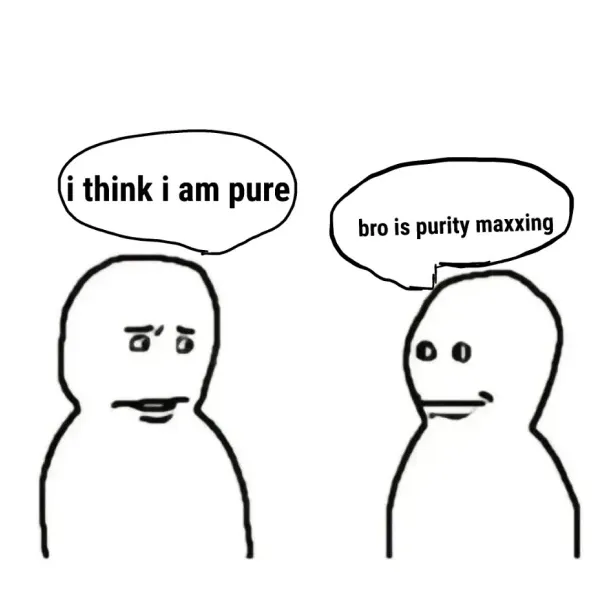
Are the people "pure"? My initial thoughts on populism
I am currently reading a book I found in my college’s library, “A Logic of Populism: India and Its States” by Srikrishna Ayyangar. If any reader from IIIT Hyderabad wants to borrow this book from the library, its ID is 320.56620954. Let’s try to define populism in simple terms as we understand it today, without using heavy academic keywords.
On googling “populism”, I got the following definition: “a political approach that strives to appeal to ordinary people who feel that their concerns are disregarded by established elite groups”. The definition of populism in academic circles is essentially contested, but the above definition is a good starting point for our discussion. Mudde, in his research paper “The Populist Zeitgeist”, defines populism as a thin-centered ideology that considers society to be ultimately separated into two homogeneous and antagonistic groups, “the pure people” versus “the corrupt elite”, and which argues that politics should be an expression of the volonté générale (general will) of the people.
I will take the term the pure people and try to dissect the word “pure” in it. The word “pure” is a very interesting one. Pure generally means something without contamination. This word has a lot of presence in our society. We say “pure vegetarian”, “pure water”, “pure milk”, “pure love”, and “pure soul”, etc. Brands sell us products using taglines like “100% pure honey” or “100% pure coconut oil”. Interestingly, caste-based discrimination is also deeply centered around the idea of “purity”.
Using the word “purity”, you can make something feel unquestionable to some extent. But my point is that purity is a tool used to distinguish between certain things or groups. And this is exactly where it becomes powerful. Populist leaders create a base of supporters by exploiting this idea of purity.
Now, coming back to the term “the pure people”: purity here means that people’s will is seen as uncontaminated, morally good/virtuous, and beyond question. People are pure, their collective will is final, and their demands should be fulfilled at any cost.
An innocent question may arise- what’s wrong with fulfilling people’s collective desires? After all, all they want is a better standard of living. But here’s the catch: many among “the people” can also hold views like racism, casteism, or extreme religious fanaticism. So the problem is not “the people” themselves, but the assumption that they are always morally right. Populism becomes dangerous when “the people” are treated as morally pure, because it shuts down disagreement and justifies exclusion.
Populism does not exist only in democracies. Many authoritarian leaders also enjoy strong mass public support. For example, many people in Nepal support monarchy, it is, in a sense, the people’s will there. But is their will pure? Are the people pure? Our Indian mind often finds it hard to even imagine supporting a monarchy, which itself shows how relative and constructed this idea of “the people” is.
People generally associate populism only with right-wing politics. A recent popular counterexample is NYC’s mayor Zohran Mamdani, whose campaign was centered on working for common people and redistributing from rich elites. He is a self-identified democratic socialist. This shows that populism is not tied to a single ideology, it can attach itself to both left and right.
An interesting example of different types of populism can be found in the Aam Aadmi Party. A comparison between Arvind Kejriwal and his former party colleague Yogendra Yadav makes this clearer. Kejriwal’s way of pitching his ideas had a pattern: bring power back to people by reforming institutions, assuming that people are already pure the way they are and there is no need to change their social behaviour. On the other hand, Yogendra Yadav’s approach focused on drawing attention to structural issues affecting specific social groups like the working class, displaced communities, farmers, and so on. The difference is subtle but important.
Narendra Modi, Naveen Pattnaik, Mamata Banerjee, and Chandra Babu Naidu represent a mix of different types of populism. Modi’s populism initially gained momentum through cultural and religious appeal; later, the “Gujarat model” added another layer of developmental or aspirational populism. Mamata Banerjee’s populism emerged from grassroots anti-incumbency movements and pro-poor mobilization, making her a welfare-oriented and street-mobilization type of populist leader. Naveen Pattnaik certainly inherited his father’s legacy, which played a big role in his initial popularity; however, it later evolved into persona-based populism, where he is often seen as bigger than the party itself. Naidu’s initial appeal was a mix of technocratic governance and development-focused narratives, which led to a kind of technocratic-populism centered around efficiency and modernization.
All these leaders were elected by the will of the people, yet we can point out many inefficiencies and downsides in their governance. Hence, my answer to the question “Are the people pure?” is no, they are not, and we, the people, can never be pure.
Do I support those network-city, Silicon Valley-type CEO-run governments? Absolutely not. The will of the people is essential, but we must not treat the people as morally pure.
I am open to any feedback or criticism on this post. I hope you liked this post. If you want to say Hi or anything, here’s my Telegram @ashirbadtele or you can mail me at ashirbadreal@proton.me.